- The Roundup
- Posts
- Real Estate and Bitcoin

Good Morning to all the Bitcoiners out there,
Most of us grew up being told the same thing. Work hard, save money, buy property.
Real estate was the goal. The proof that you had made it, and the asset you left your kids.
For most of the 20th century, that advice was not wrong.
This week I want to sit down and have an honest conversation with you about where real estate actually sits in the world right now (and what Bitcoin has to do with it).
Here is what we are covering:
Why Fannie Mae accepting Bitcoin as mortgage collateral is bigger than it sounds.
Why tokenized real estate is not the answer (and one company's collapse proves it); and
What Dubai's property crash tells us about which asset is actually the safe haven.
We recently launched SatsDrop - a fun and free way to stack sats in the bear market.
No. Strings. Attached.
Head over to Drop.RhinoBitcoin.com to check it out live!

1. Can I Buy a House Without Selling my Bitcoin?
@BitcoinNewsCom
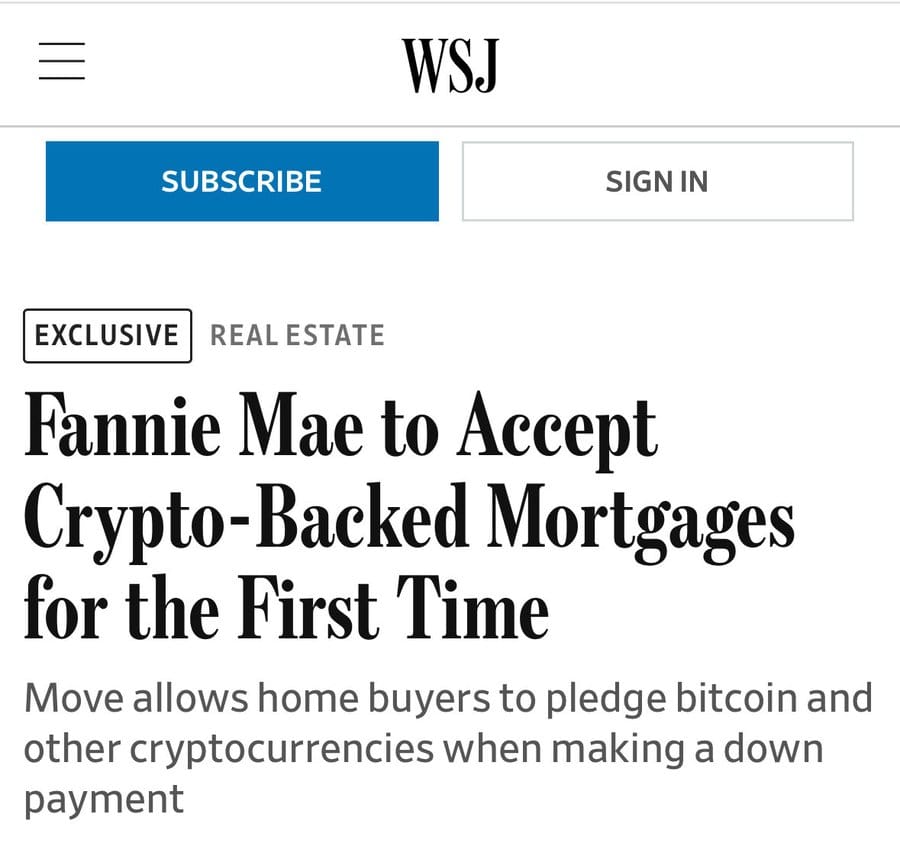
This week, Coinbase and mortgage company Better Home & Finance announced something worth paying attention to.
You can now use Bitcoin as collateral for a Fannie Mae-backed mortgage.
Not sell your Bitcoin. Pledge it.
Here is how it works:
Say you want to buy a $500,000 home. Instead of selling your Bitcoin for a down payment and triggering a capital gains event, you pledge it as collateral for a separate loan.
That loan covers your down payment. Your main mortgage is a standard conforming loan at the same rates and terms you would get from any bank. No margin calls. If Bitcoin's price falls, nothing changes on your loan as long as you keep making your monthly payments.
Your Bitcoin stays in custody at Coinbase Prime for the life of the loan. When it is paid off, you get it back.
Coinbase's head of consumer products said they’re “giving people access to housing in a way that is very similar to how private bankers serve some of the wealthiest customers. They don't sell assets to buy stuff. They take loans against assets".
Think about that for a second. The wealthy have always done this. They borrow against their assets instead of selling them. They keep the upside. They keep the appreciation. For the first time, millions of Bitcoiners can do the same.
Fannie Mae is a $4 trillion government-backed mortgage enterprise. When they put their name on a Bitcoin-collateralized loan, they are not doing us a favor. They are recognizing something they can no longer afford to ignore.
2. Why Tokenizing Real Estate Is Not the Same Thing
Photograph: Sarah Rice
Now here is where I want to push back on something you may have heard in the ‘crypto’ space.
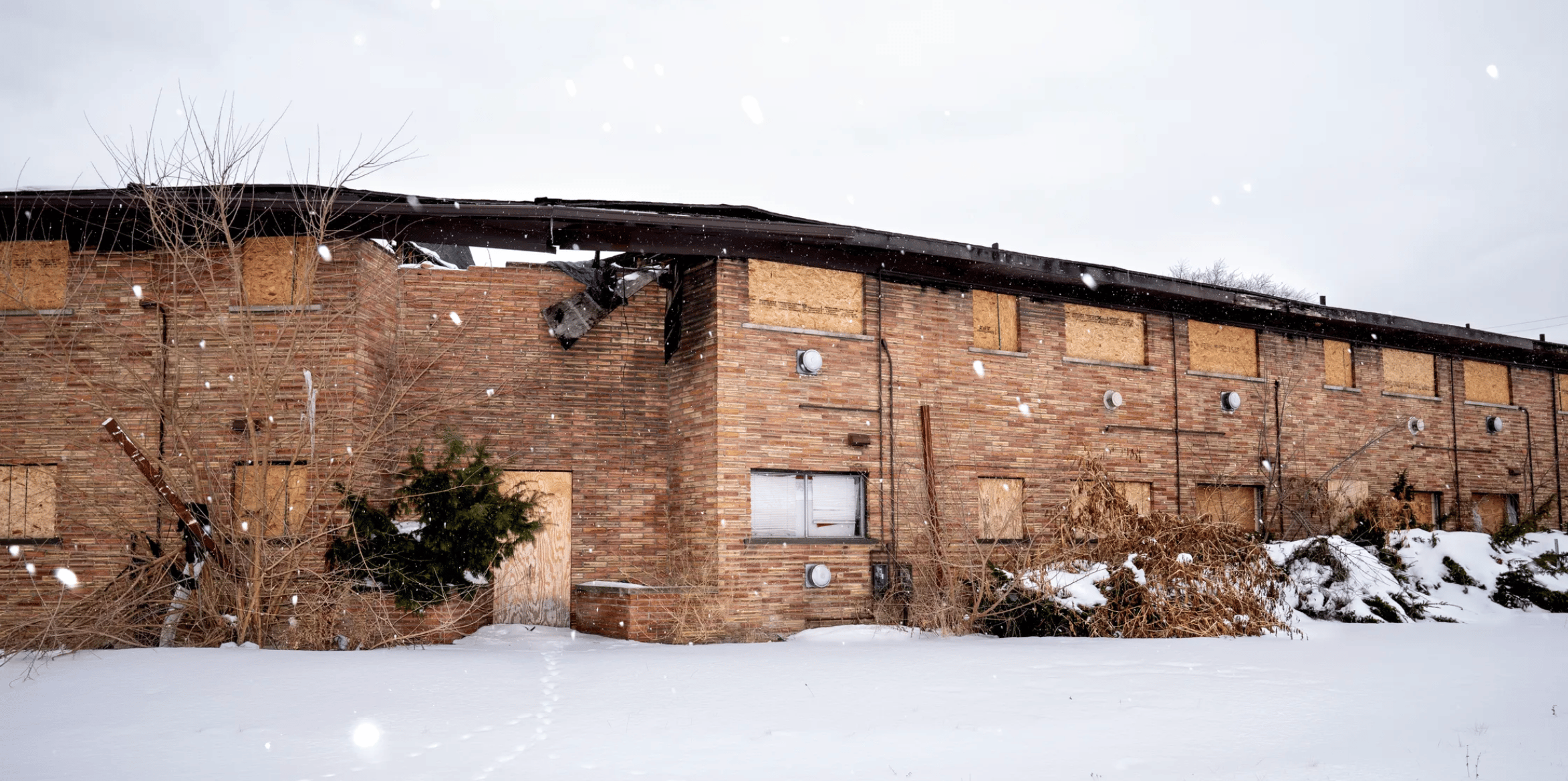
A few weeks ago, a company called RealT started quietly collapsing in Detroit.
RealT sold the idea of “tokenized” real estate. Fractional ownership of rental properties through blockchain tokens. The pitch was that anyone, anywhere in the world, could buy a piece of a Detroit rental home and collect weekly rent.
The reality?
RealT stopped paying investors. It owes millions in unpaid property taxes and water bills. Over 300 properties are facing tax foreclosure. Tenants are living without heat. The property management company has a skeleton crew of five people who are not answering phones.
The tokens are still on the blockchain, however in the real world, the properties are falling into a state of disrepair.
Here is what’s important to understand though - Bitcoin does not need real estate to make it more useful or legitimate. Bitcoin is the underlying collateral. Real estate is the thing you borrow to buy.
Putting a deed “onchain” does not fix a bad landlord, an unpaid tax bill, or a broken boiler in March. It just adds technical complexity to a problem that was never technical to begin with.
The Fannie Mae story and the RealT story happened within weeks of each other. One shows what it looks like when Bitcoin meets the real world correctly. The other shows what happens when crypto tries to reinvent something that did not need reinventing.
3. The Scoreboard (Since the War Started)
@TradingView
Let me give you a quick comparison that I believe deserves more attention than it’s currently getting.
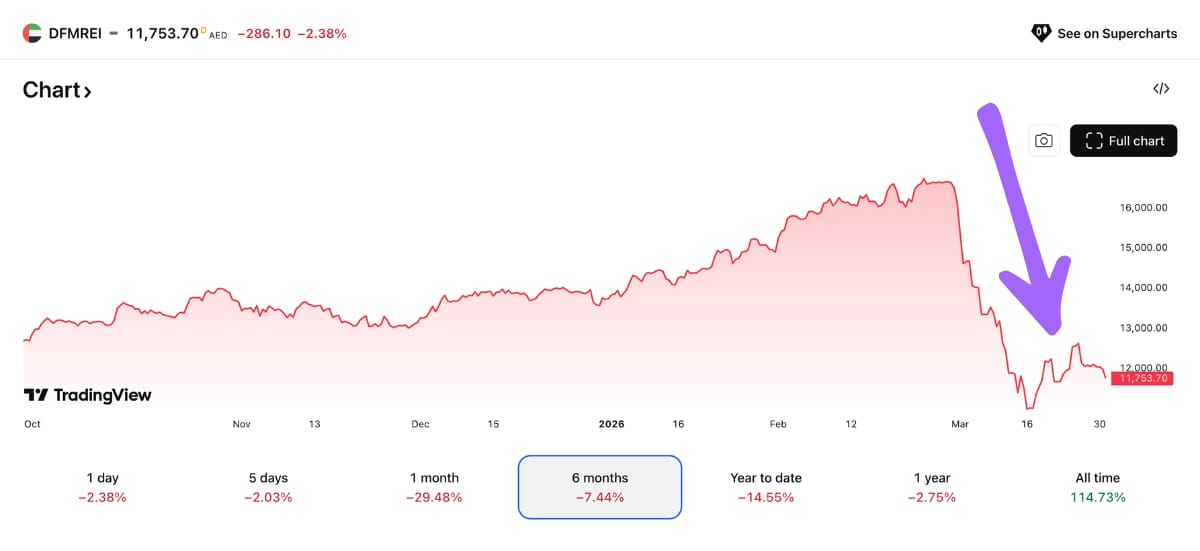
Since Operation Epic Fury began on February 28, Dubai real estate is down roughly 30%.
The Dubai Financial Market Real Estate Index dropped from 16,306 to 11,753. Emaar Properties, the developer behind the Burj Khalifa, is down 22%.
Dubai spent years marketing itself as the world's safe haven for global wealth. 9,800 millionaires moved there in 2025 alone, bringing $63 billion with them. When Iranian missiles hit the airport and luxury hotels, that capital left fast.
Bitcoin over the same period is up roughly 5%.
Now remember, Dubai real estate was the physical, tangible, marble-lobby store of value that was supposed to be the stable one. Bitcoin was dubbed the volatile digital asset.
Well, the war tested both, and Bitcoin’s out ahead for the moment.
What makes this more interesting going forward is the increased likelihood of a global oil supply shock. Energy analyst Rory Johnston shared a JPMorgan map this week showing that the Hormuz supply disruption is moving through the global economy like an air pocket through a pipeline.
East Africa was hit last week. East Asia this week. Europe next week. North America in two more weeks.
The economic pressure from this war has not fully arrived yet. Bitcoin's relative performance may only be in the early innings.
Where does real estate sit in your portfolio? |
The Bottom Line
Fannie Mae just told 52 million American crypto holders that their Bitcoin is good enough collateral for a government-backed mortgage.
A tokenized real estate company in Detroit just proved that putting property on a blockchain solves nothing if the property is falling apart.
And Dubai's real estate market lost 28% since the war started while Bitcoin is up 5%.
Real estate had a 100-year head start. Bitcoin is five weeks into a war and already winning.
Stack accordingly.
Chat next Tuesday.
Hector
How can we improve? |