- The Roundup
- Posts
- The Myth of Stablecoins

Good Morning Bitcoiners,
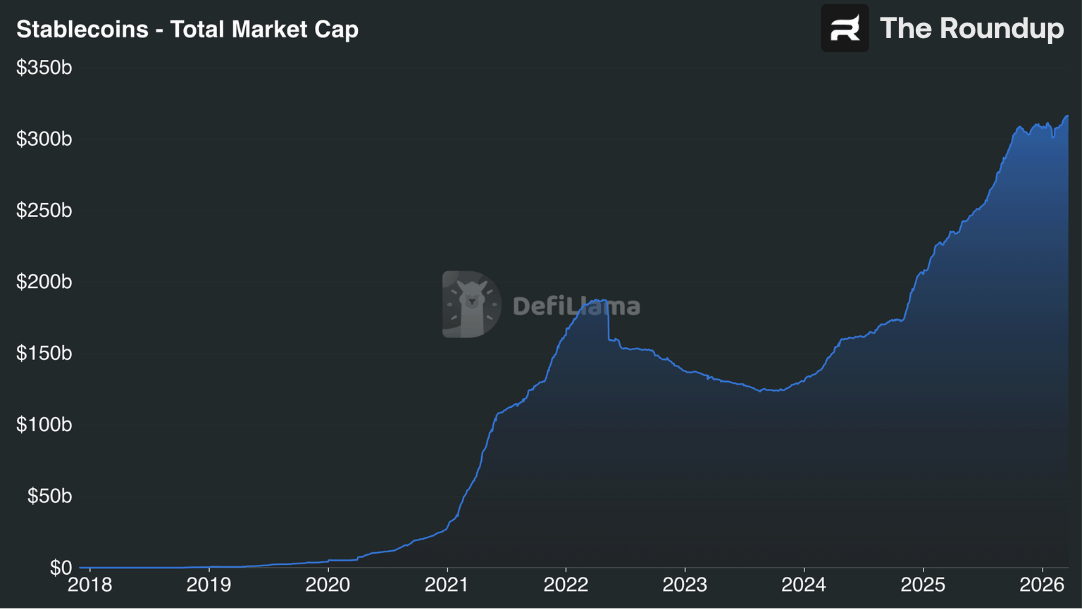
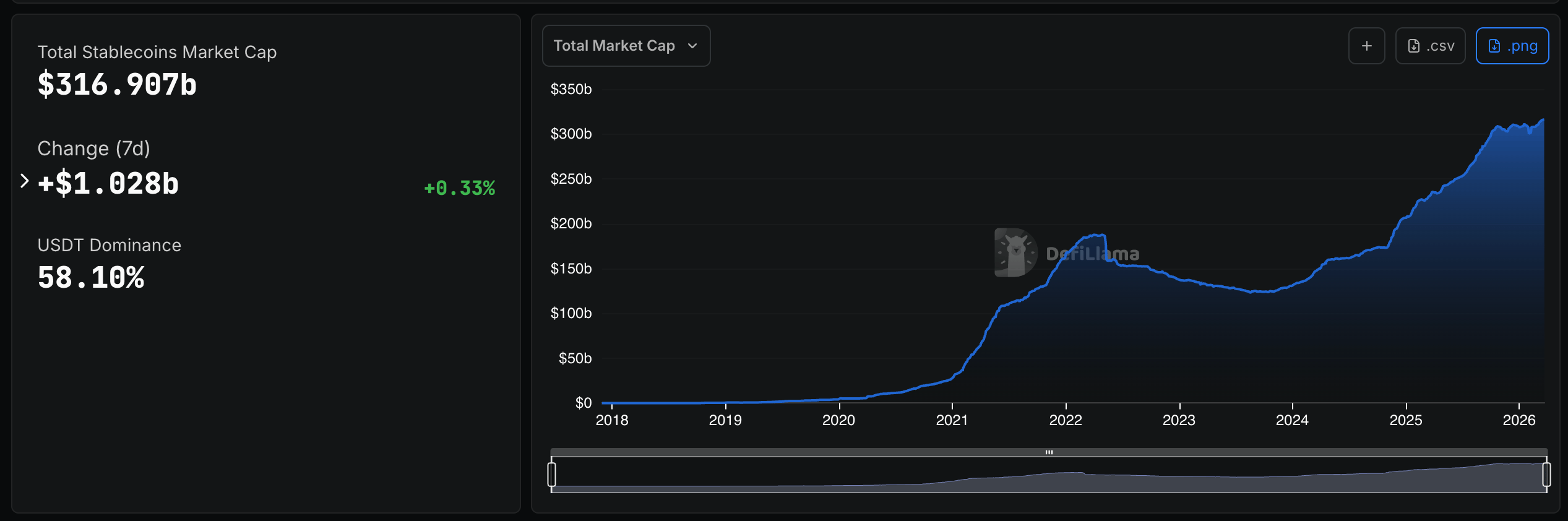
The total stablecoin market cap just crossed $316 billion (up 56% y.o.y).
Transaction volume has more than doubled in the past year, as Visa advises their clients on stablecoin strategies and AMC accepts them as payment for their movies.
Everyone is excited.
So I figured why not ask the question nobody else wants to…
If they're called stablecoins, why do they keep going to zero?
Want free Sats?
We recently launched SatsDrop - a fun and free way to stack sats in the bear market.
No. Strings. Attached.
Head over to Drop.RhinoBitcoin.com to check it out live!

1. What are you actually holding?
@defillama
Look at the chart above. It’s straight up and to the right (with one very notable dip in the middle).
That dip was not a correction, but rather a $45 billion wipe out of people’s savings in a single week.
Before we get there though, let's talk about what a stablecoin actually is, because the name does a lot of misleading work.
A stablecoin is a digital token designed to hold a fixed value, usually one US dollar. Take the speed of crypto and remove the violent price swings.
Pay workers across borders instantly. Move money on a Sunday at midnight. The pitch is genuinely good, which is why $316 billion dollars is sitting in them.
The problem is that "stable" describes the goal, not the guarantee. There are essentially three types, and they are not all equally safe:
Fiat-backed (USDT, USDC): A company holds actual dollars in a bank account and issues tokens against that reserve (you’re essentially trusting companies such as Tether that they hold what they say they hold).
Crypto-backed: Other digital assets serve as collateral. Stability is only as good as the liquidity/value of these underlying assets.
Algorithmic: Software and economic incentives maintain the peg, with no hard collateral at all.
That third category is where the chart's first dip lives, but the second is where this week's story begins.
2. This Weekend, It Happened (Yet) Again
@CoinGecko
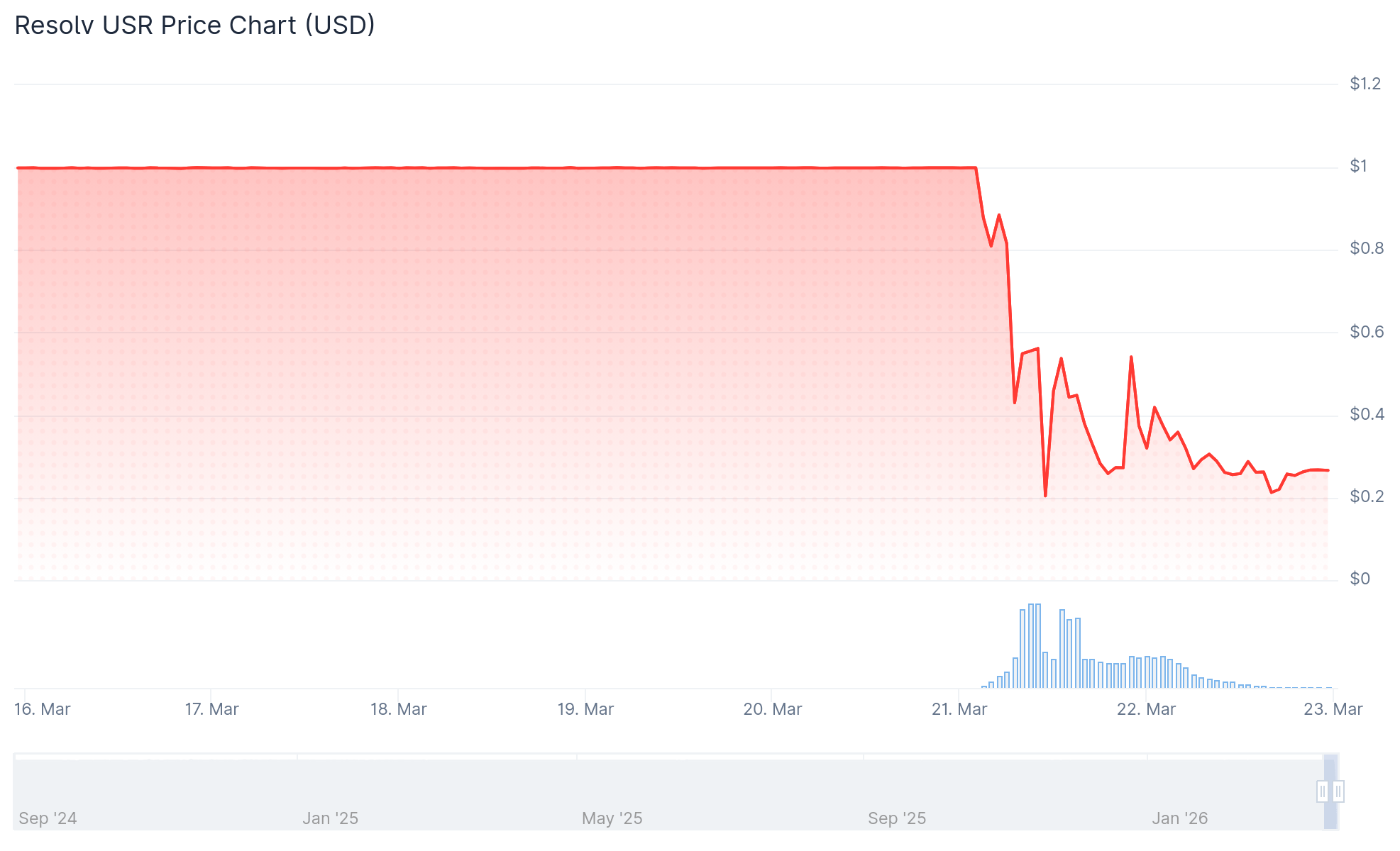
On Sunday morning, an attacker deposited a few hundred thousand dollars into a DeFi protocol called Resolv Labs, which issues a stablecoin called USR.
Using a compromised private key controlling the protocol's off-chain minting approvals (yes, its incredible this wasn’t more secure), they minted 80 million unbacked USR tokens out of thin air. Within 17 minutes, USR crashed from $1 to $0.025.
The attacker converted the tokens into a staked version called wstUSR, swapped into other stablecoins, then into Ethereum, and walked away with roughly $25 million in profit.
Resolv Labs later said it "identified the incident quickly" but reality says otherwise. On-chain data shows the attacker was dumping for approximately four hours before the protocol was finally paused.
As always, the devil is in the details. The smart contracts themselves had in fact been audited and the system worked exactly as designed, because Chainalysis confirmed the exploit was not a code bug (it was a structural flaw).
The entire minting process relied on a single privileged private key stored off-chain, with no on-chain cap on how much USR could be created.
Security researcher Youssef Nabih put it plainly: "If your security model is just 'please don't steal the admin key,' you built a centralized money printer, not DeFi."
One detail not widely covered: USR's market cap dropped from roughly $400 million in early February to around $100 million before the exploit. A 75% contraction before anyone publicly knew anything was wrong. Whether that reflects routine redemptions or something more is still being investigated.
Resolv Labs was founded by Ivan Kozlov (Moscow Institute of Physics and Technology, structured finance background), Tim Shekikhachev (formerly at Citibank), and Fedor Chmile as CTO. They raised $10 million in April 2025. Fewer than 10 people, $400 million in user funds at peak.
But somehow, nobody built a mint limit into the contract!
DeFi hacks in Q1 2026 have totalled over $137 million, and the cycle repeats: audits miss the centralization risk, the hack happens, blame lands on the auditors, nothing changes.
What happened in May 2022 with TerraUSD is worth understanding, because it is the same story with a different mechanism. UST was the third largest stablecoin in the world, $18 billion market cap, algorithmic peg maintained by a two-token system.
A protocol called Anchor was paying 19.5% annual yield on deposits. Nineteen and a half percent. On a stablecoin.
On May 7, large wallets started withdrawing. Others followed. The mechanism went into a death spiral.
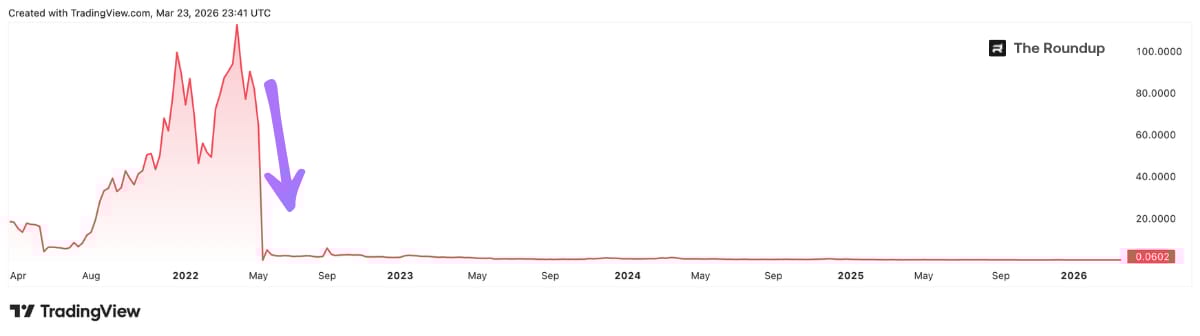
LUNA went from $87 to fractions of a cent in seven days. The Luna Foundation Guard deployed $480 million in Bitcoin reserves. It did not matter. $45 billion wiped out. People lost their life savings.
Both events show up as dips in the initial Defillama chart above. Different mechanisms, but the same exact outcome. And after each one, the total market cap recovered and climbed, because the demand for digital dollars is real (even if the subsequent protocol security is not).
3. The Real Message Behind $316B in Stablecoins
$316 billion in stablecoins surely represents strong demand from people who understand that programmable, borderless money is a good idea. They have learned wallets, self-custody, on-chain transactions. They get it.
They just stopped short of the final step.
Because what is a stablecoin, ultimately? It is a dollar on a blockchain. The dollar with all its debasement and inflation, backed by a government managing $36 trillion in debt.
You have taken on the complexity of Bitcoin and applied it to an asset that loses 2 to 3 percent of its purchasing power every year by design, and can go to zero in a week if the algorithm fails or if Tether decides to freeze your account.
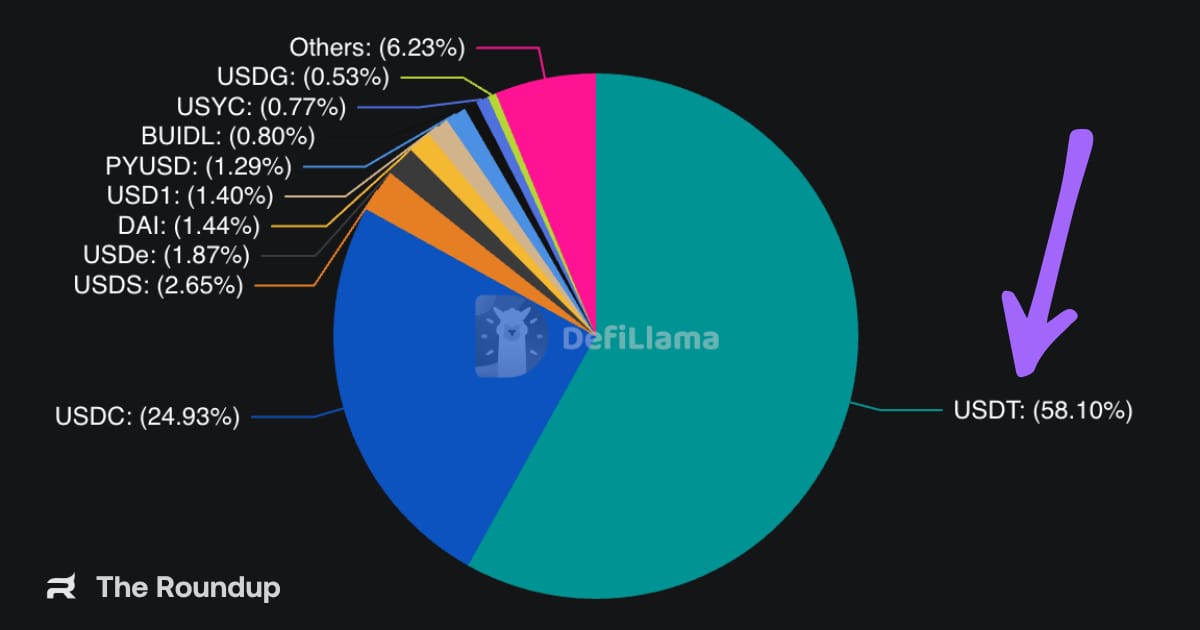
USDT dominance sits at 58%. More than half of all stablecoins controlled by one company, whose reserve audits have been subject to regulatory scrutiny for years.
This is not me saying stablecoins are useless. The cross-border payments use case is real. But the explosive growth in stablecoin adoption is not a competitor to Bitcoin.
It is the most compelling evidence you will ever see for why Bitcoin exists.
Which type of stablecoin do you trust most? |
The Bottom Line
The stablecoin market is real, growing, and useful for moving money. But the name is a promise that has been broken before.
$316 billion in people who already understand digital money, self-custody, and on-chain transactions. They have done the hard part. They just haven't asked the next question yet.
Every time a stablecoin fails, Bitcoin is still there. Still being mined. Still capped at 21 million.
Stack accordingly everyone.
Chat next Tuesday.
Hector
How can we improve? |