- The Roundup
- Posts
- There Are Weeks Where Decades Happen
There Are Weeks Where Decades Happen
Oil spiked, bonds cracked, and Bitcoin didn't move. Are you paying attention yet?

Hector Alvero
March 10, 2026
Good Morning Bitcoiners,
The last 7 days were one of those weeks that felt like decades were happening to us all at once.
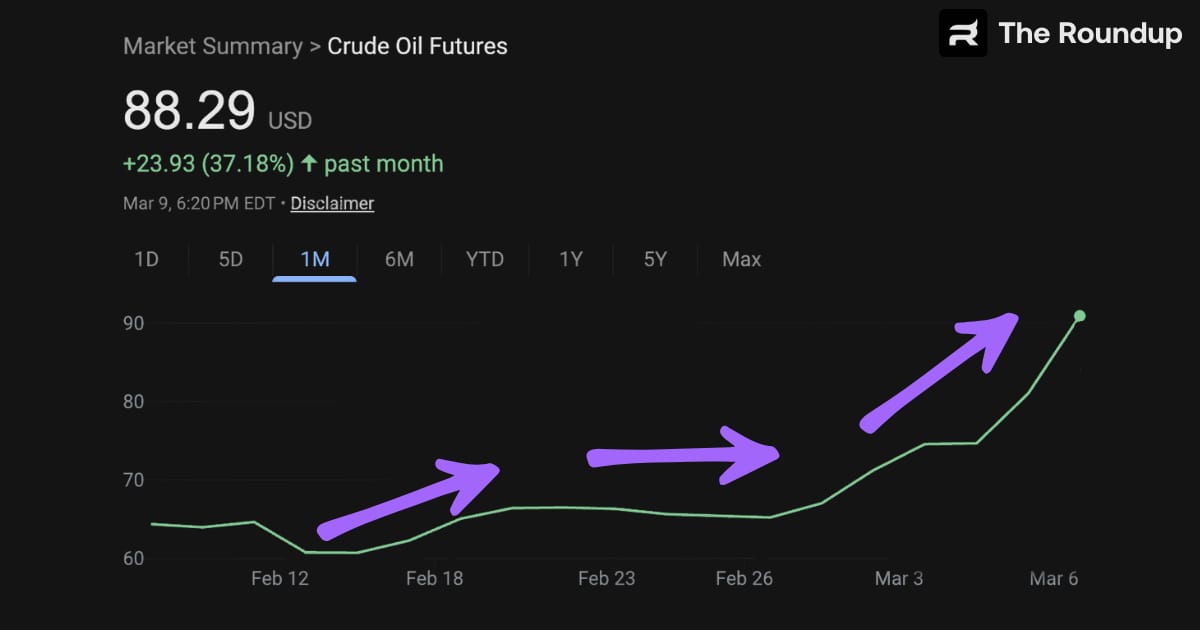
Oil posted its biggest weekly gain in futures trading history. The February jobs report came in at -92,000 (against expectations of +50,000) and stocks had their worst week in nearly a year.
Bitcoin? Holding strong at $67,000-69,000 through all of it and is trading above where it was when the war initially broke out.
Here's what we're covering this week:
Why oil's historic move combined with a crashing jobs report is a stagflation trap
Why the Fed is paralyzed, and what Warren Pies and Luke Gromen think happens next
What 77% of Bitcoin treasury companies being underwater is really telling us
1. The Stagflation Trap
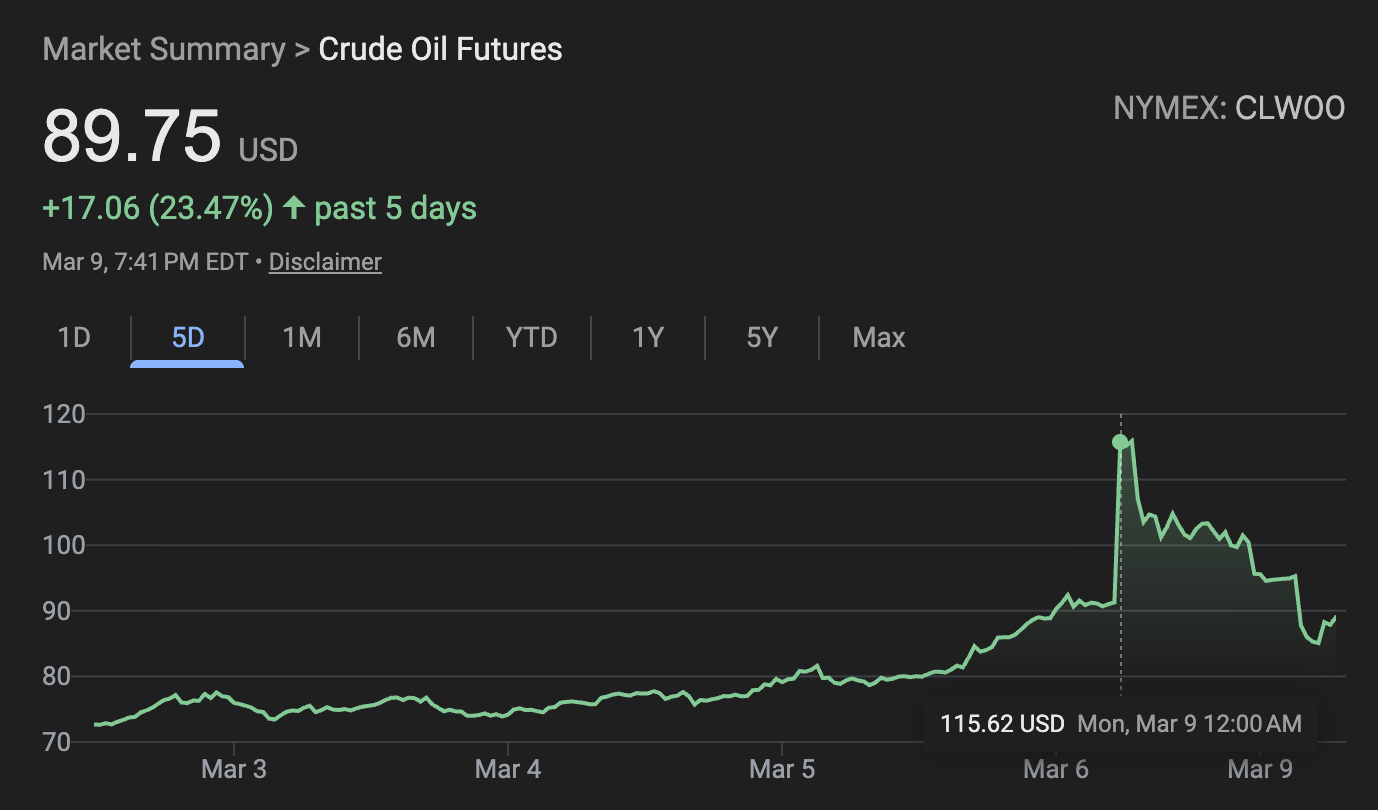
Oil posted its biggest weekly gain since the futures contract began trading in 1983.
A 35.6% move in five days, driven by the Strait of Hormuz blockade cutting off roughly 20% of global oil supply. The intraday high hit $119 a barrel before pulling back to around $91 by Friday close.
On the exact same day oil crossed $90, the February jobs report landed. The economy shed 92,000 jobs against expectations of a 50,000 gain. Unemployment climbed to 4.4%. The three-month average for job gains is now just 6,000 per month.
Rising prices. Falling employment. That combination has a name: stagflation.
The last time something like this hit, in 2022, the Fed raised rates aggressively and Bitcoin got crushed alongside the Nasdaq. But the situation today is structurally different.
The Fed is already at 3.5% and the US is paying over $1 trillion a year in interest on $36 trillion of debt. Hiking meaningfully from here risks blowing up the debt math entirely.
So you have oil-driven inflation the Fed cannot fight, and a jobs market deteriorating fast. Bitcoin absorbed all of it and barely moved.
That tells us something about where the floor is
NEW VIDEO DROP👇
2. The Fed Has One Hand Tied Behind Its Back
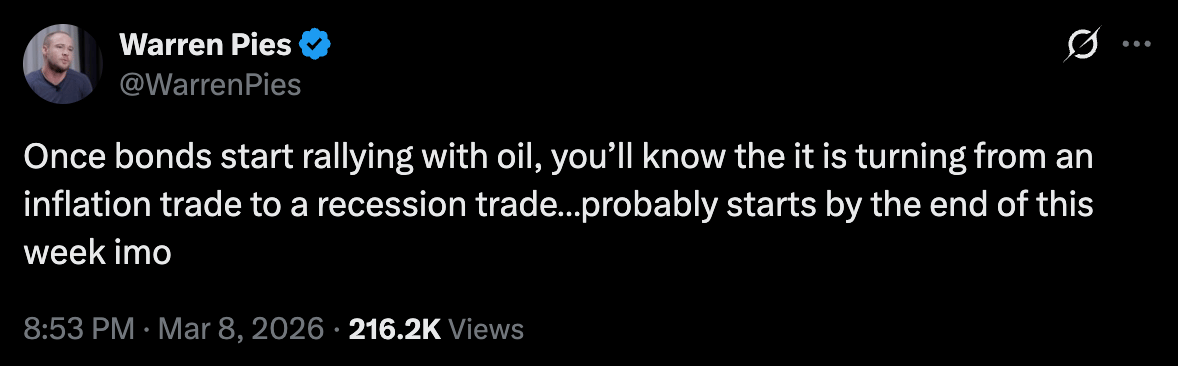
Macro analyst Warren Pies made an important observation this week (tweet above).
Once bonds start rallying alongside oil, that is the signal the market has flipped from pricing inflation to pricing recession. He thinks it starts by end of this week.
Luke Gromen's response was sharper: it does not matter which way it flips. A recession crushes US tax receipts while interest payments and entitlement outlays stay fixed.
The fiscal gap explodes. At that point the US faces a binary choice: miss a payment, or print money into an already oil-spiked environment. Neither path is good for bonds.
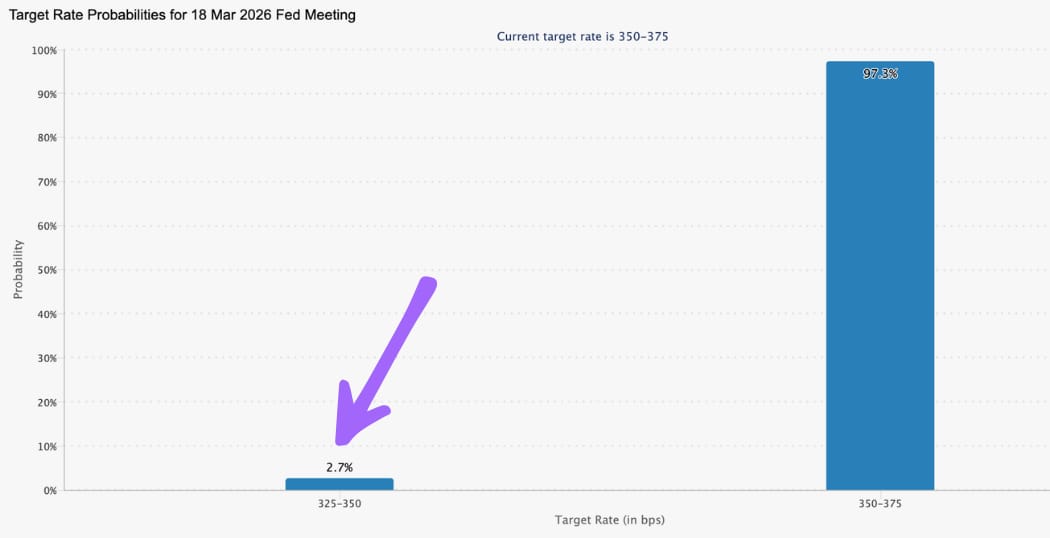
Polymarket is already pricing a 41% chance of US recession in 2026. The CME FedWatch tool shows a 97.3% probability of no change at the March 18 meeting. Powell is completely frozen.
Oil is too hot to justify cutting rates. The jobs market is too weak to justify hiking. So the Fed sits perfectly still while the pressure builds underneath.
@CMEGroup
That is the trap. Inflation and recession arriving together, with the policy response to one making the other worse.
In practice, that means the Fed will eventually have to choose between letting the economy crater or flooding the system with liquidity to cushion the blow.
History is pretty clear on which one they pick. And when they do start printing, every dollar of new money chasing a fixed supply of Bitcoin.
Not because Bitcoin is a "risk-on" trade, but because it is the only asset in the world where the supply cannot be expanded to meet the demand
3. The Corporate Treasury Tell
@Caprioleio
Charles Edwards published data this week that deserves more attention than it got.
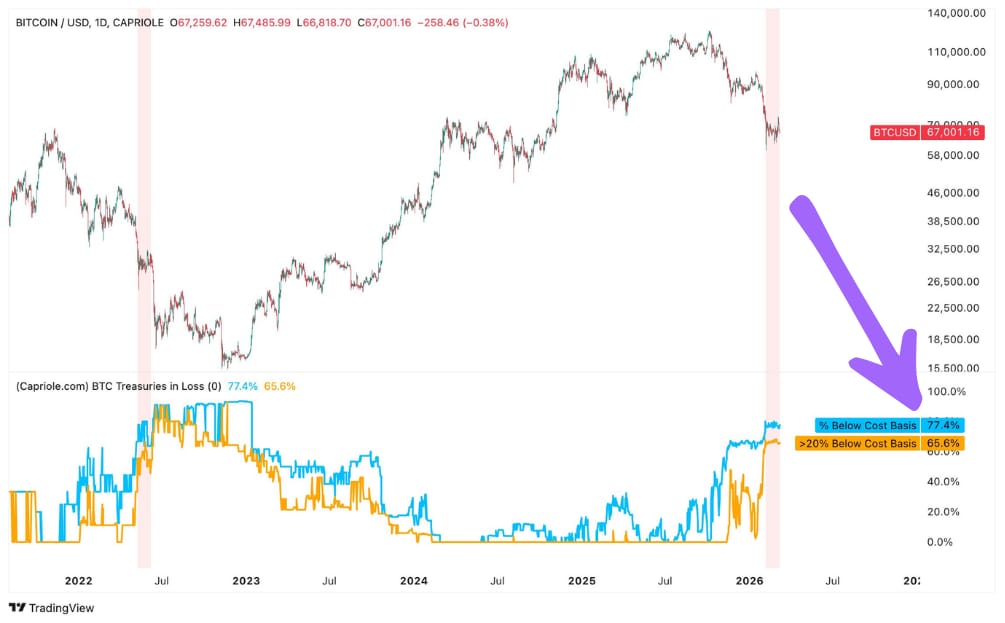
77% of Bitcoin Treasury Companies are currently underwater on their purchases. 65.6% are more than 20% below their cost basis. The last time this reading was this high was May 2022 (which turned out to be the cycle bottom).
What makes these different from a simple price chart is that these are companies that made a deliberate, public, balance-sheet commitment to Bitcoin. They issued equity, raised debt, and went on record with their shareholders. The reputational and financial cost of selling now would be enormous.
The few that have sold (Bitdeer, Core Scientific, Riot) were miners pivoting to AI. Strategic reallocation, not panic. Very few of the pure-play Bitcoin treasury companies has sold their Bitcoin.
And the largest one of all (Strategy) just made its 11th consecutive weekly purchase: 17,994 BTC for $1.28 billion. They now hold 738,731 BTC and are sitting on roughly $7 billion in unrealized losses. Still buying. Every single week.
The last time this many corporate treasuries were underwater was May 2022. You know what happened next.
The last time oil crossed $100 per barrel was in which year? |
The Bottom Line
Oil posted its biggest weekly gain in recorded futures history. Jobs collapsed. The Fed is paralyzed between inflation and recession. Corporate treasuries are deep underwater and nobody is selling. And Bitcoin held $67,000-69,000 through all of it.
Markets are forward-looking. The price of Bitcoin today is not pricing the war. It is pricing what comes after.
The downside looks well-defined. The upside is open-ended. That is not hope. That is the data.
Stack accordingly.
Chat next Tuesday.
How could we improve? |